
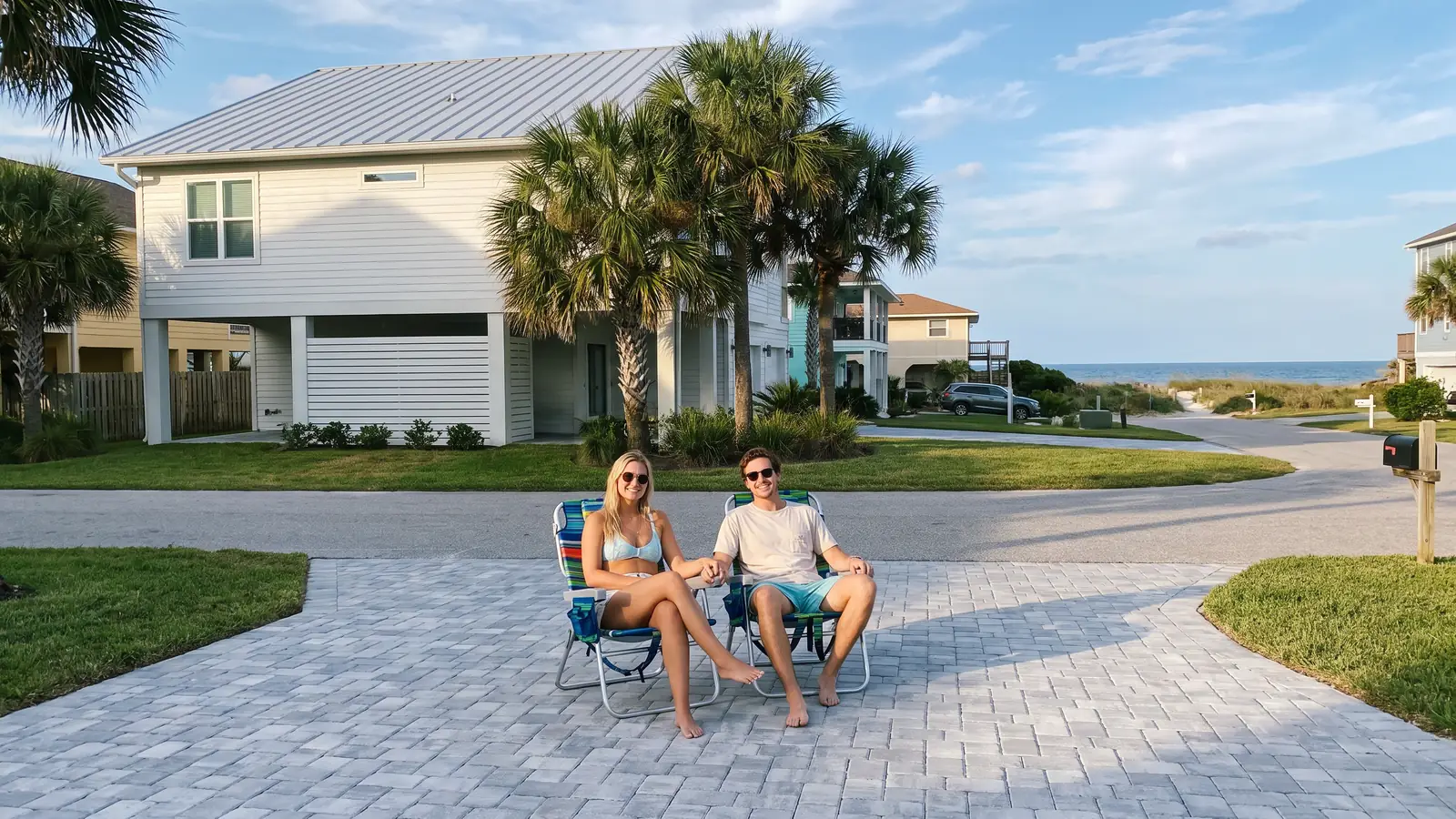
Richer color and joints that stay full
Paver Sealing in Jacksonville Beach, FL
Salt air, sand and sun are hard on pavers, so call (904) 541-9975 for a free sealing estimate.
- Brings out deeper paver color
- Fresh joint sand helps lock pavers in place
- Gives weeds less room to grow
- Makes the surface easier to keep clean
- Free estimate, no obligation
Request a Free Estimate
Free, no obligation.
Who can seal my pavers at a Jacksonville Beach home?
A local contractor can seal pavers anywhere in Jacksonville Beach, FL, and you will hear back within 1 business day, usually much sooner. The estimate is free, and you decide whether to book. To begin, call (904) 541-9975.
Sealing deepens the color of your pavers, helps joint sand stay put and makes sand and dirt easier to rinse away. Think of the driveway you park on every night, faded by sun and gritty along the seams, now dark and even with full joints. A driveway faces tires and oil drips, a pool deck faces splashing and bare feet, and each needs its own plan. Explain how you use each spot when you book a free estimate.
Paver Sealing Jacksonville Beach Is Proud to Serve Northeast Florida
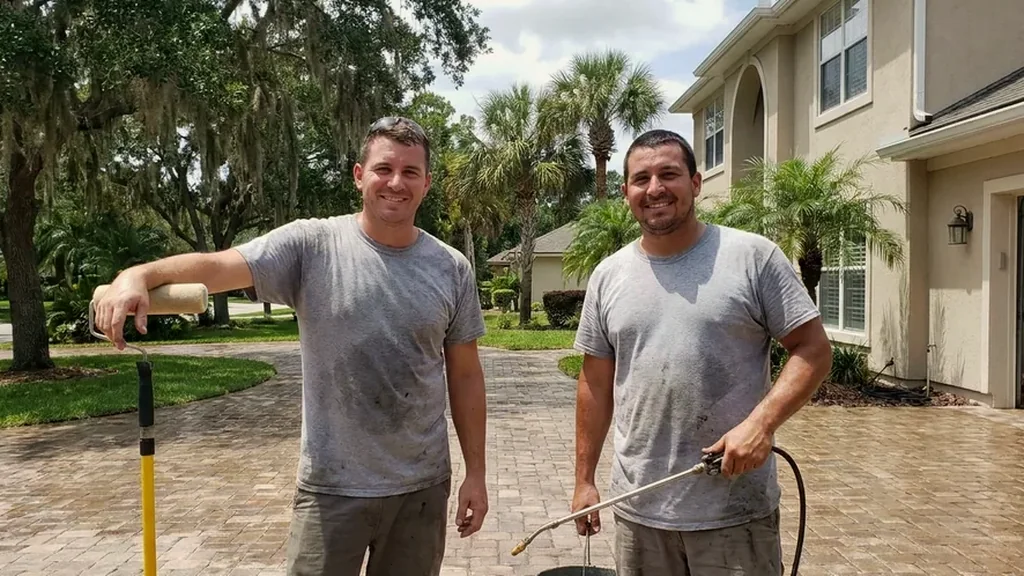
What is included when pavers are sealed in Jacksonville Beach?
A full job has four parts: a walk-through, a deep clean, fresh joint sand and the sealer coat. The cleaning usually takes the longest. To walk through each part for your home, call (904) 541-9975.
Walk-through
A contractor looks at square footage, loose or sunken pavers, old sealer and any place where water collects before naming a price.
Deep clean
Salt haze, mildew and dirt come off with cleaners made for concrete pavers and a surface cleaner that spares the joints.
Joint sand
Kiln dried sand fills each gap so pavers lock together and weeds find less room.
Sealer coat
The product goes on dry pavers in the finish you chose, and puddles are rolled out so the coat dries evenly.
How can I tell my pavers need sealing?
Water that soaks in instead of beading is the clearest sign, according to a Jacksonville sealing company. Other signs include joint sand washing out, weeds or ants coming back and color that looks chalky. Topping off joints early costs less than relaying pavers that have shifted. For a quick opinion on yours, call (904) 541-9975.
Which paver sealer works well near the ocean?
Film-forming or penetrating
A film-forming sealer builds a layer on the surface, costs more and gives the wet look. A penetrating sealer soaks in, costs less and does not last as long, according to a 2026 Jacksonville guide. Ask the contractor which one goes on each area and why. To compare options for your pavers, call (904) 541-9975.
Finishes you can choose
One Jacksonville company offers wet look high gloss, wet look satin, natural matte and a penetrating product for natural stone. The gloss deepens color the most, and the matte stays closest to bare paver. No single product suits every home, so ask to see samples when you book a free estimate.
Should I pick a wet look or a matte finish?
Pick wet look for dark, rich color with some shine, or matte to stay close to how the pavers looked new. Around a pool, footing matters more than shine, and a 2026 Jacksonville guide warns that a glossy film can get slippery when wet. In an HOA, check whether a high gloss needs approval. To see both finishes, book a free estimate.
How often should pavers be resealed near the beach?
Expect three to five years from most coats, says a 2026 Jacksonville guide, with driveways and pool decks nearer three and shaded patios nearer five. Another Jacksonville company calls two to three years typical, since full sun, pool chlorine and storms wear a coat down. Your own schedule depends on sun and traffic. To have your coat checked, call (904) 541-9975.
Can sealer just go over old sealer or dirty pavers?
No, that shortcut is how jobs fail. A Jacksonville washing company says sealing over dirt or wet pavers fails, and that failed sealer gets stripped first, not coated over. A coat laid over the problem only locks the problem in. Ask any contractor how the old coat and the grime come off before you book a free estimate.
When is the right time of year to seal pavers in Jacksonville Beach?
Dry weather matters most
Sealer goes on a dry surface, so the forecast counts more than the calendar. One Jacksonville company names October and November as the time to seal pavers. Rain near 52 inches a year, according to Wikipedia, means a few days can slip. To choose a date around the forecast, call (904) 541-9975.
New pavers wait longer
Unilock, a paver maker, says efflorescence, the white film on new concrete pavers, can take two to three months or up to a year to fade, and that it must be gone before sealing. If your pavers are newer than that, mention the install date when you book a free estimate.
Can sealing fix sunken or loose pavers?
No, sealer will not lift a low paver or close a gap. Pavers that rock under a car or hold a puddle need their base repaired first, and joint sand only holds once they sit level. Find out if leveling is built into the quote or listed separately before you book a free estimate.
Which paved areas around a beach home can be sealed?
A driveway, pool deck, patio or walkway can each be sealed. Each wears in its own way, so the plan should change from one to the next. To begin with the area that bothers you most, book a free estimate.
Driveways
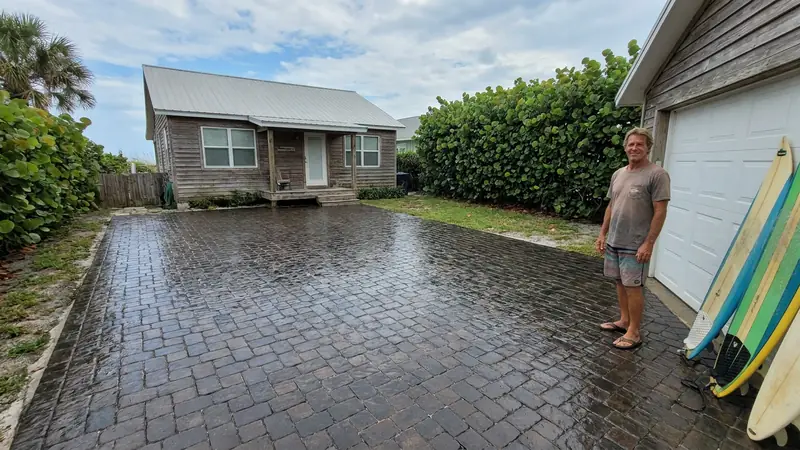
Tires, oil drips and hot afternoon sun hit the driveway before anything else on the property. Sealing here matters most along the turning path where joints loosen first.
Pool decks and lanais
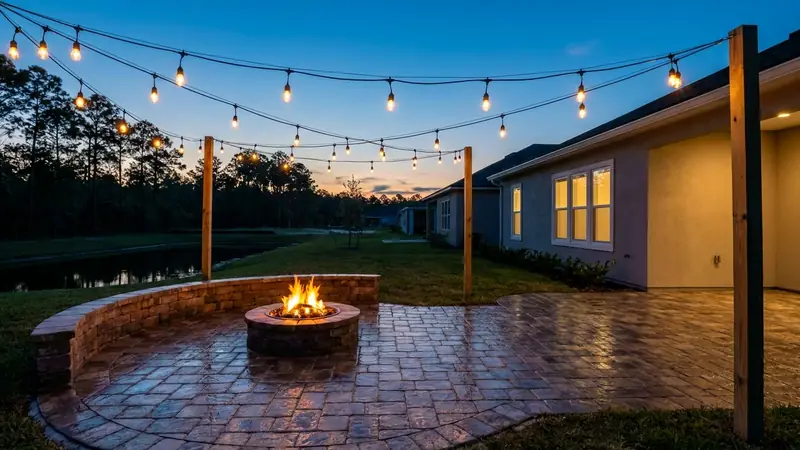
Splash water, pool chemistry and bare feet wear on a deck all day. Sealing around a pool should keep the surface from turning slick when it is wet.
Patios and outdoor showers
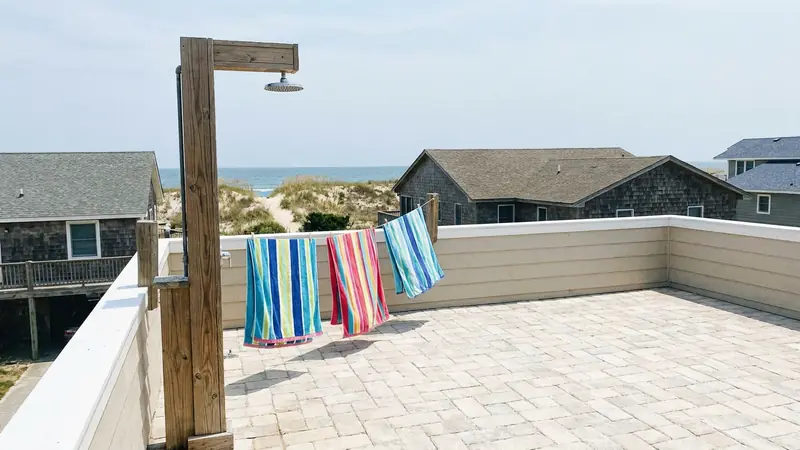
Beach homes often have a patio or a rinse-off area where sand and water collect. Sealing there is about clearing the grit and keeping joints full.
Walkways and entries
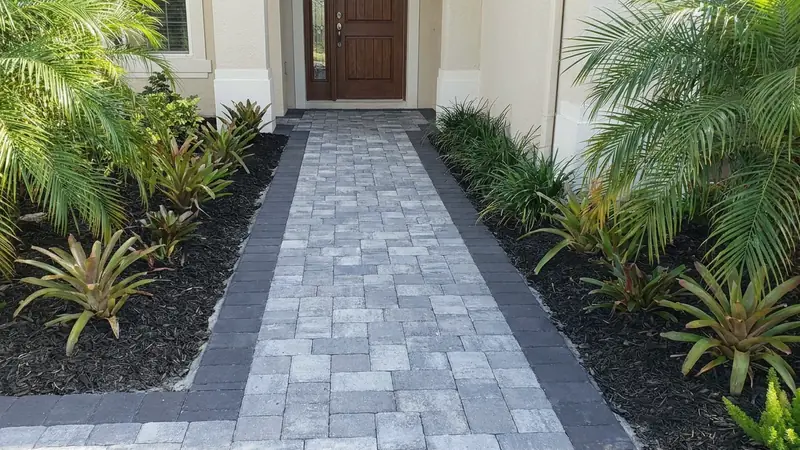
A front walk collects sand tracked in from the beach, soil and drips from potted plants. Sealing near the door changes what a visitor sees first.
What paver problems are common in Jacksonville Beach?
Five come up again and again near the ocean: sand packed into joints, salt haze, joints washed out by storms, fading in open sun and old sealer that has failed. Each one costs less to deal with early. To find which of these affect your pavers, call (904) 541-9975.
1. Sand packed into the joints
A Jacksonville washing company says sand-packed joints are common at the beach and that beach sand can sit where joint sand belongs. That sand has to come out before fresh sand and sealer go in.
2. White haze after windy weather
The same company says salt leaves a white haze on pavers after a windy event. It treats the haze with chemistry and a rinse, not a high-pressure blast.
3. Joints washed out by storms
Summer storms wash sand out of joints, says a Jacksonville sealing company. Empty joints invite weeds and let pavers shift, which is why the sand is refilled before any coat goes down.
4. Fading in open sun
A driveway without shade sits in direct sun all day long. A Jacksonville company says full sun, pool chlorine and storms can shorten a sealer's life to about two years.
5. Old sealer that has failed
Cloudy or peeling sealer cannot simply be coated over. The same company says failed sealer gets stripped first, and a Jacksonville guide prices stripping at $0.75 to $1.50 per square foot.
What does paver sealing cost in Jacksonville Beach?
Published price ranges
A Jacksonville washing company publishes $1.75 to $3.25 per square foot to clean, sand and seal, and it lists that range on its Jacksonville Beach page. Size moves the rate, and a 2026 Jacksonville guide puts an 800 to 1,200 square foot driveway at $1.50 to $2.50 and a patio under 300 square feet at $2.50 to $3.25. For a figure written for your home, book a free estimate.
What adds to the price
Stripping failed sealer adds $0.75 to $1.50 per square foot and new joint sand adds $0.25 to $0.75, says the same guide, and brick or other porous surfaces can cost 15 to 30 percent more. The company with the Jacksonville Beach page adds that beach access and condo logistics can move a quote more than square footage. To compare a quote you hold already, call (904) 541-9975.
A low bid is a warning
Bids under $1 per square foot suggest skipped prep, the 2026 guide warns. Prefer to start with a wash? Read about paver cleaning and joint sand, or browse the areas served near paver sealing in Jacksonville Beach.
| Paved area | Typical example | Clean, sand and seal |
|---|---|---|
| 300 sq ft | Small patio or walkway | $525 to $975 |
| 600 sq ft | Two car driveway | $1,050 to $1,950 |
| 1,000 sq ft | Large driveway or pool deck | $1,750 to $3,250 |
| 1,500 sq ft | Driveway plus pool deck | $2,625 to $4,875 |
Math based on the $1.75 to $3.25 per square foot that Northeast Florida paver companies published as of November 2026. Your contractor sets the actual price after seeing the surface. Repairs, leveling and stripping failed sealer are usually extra.
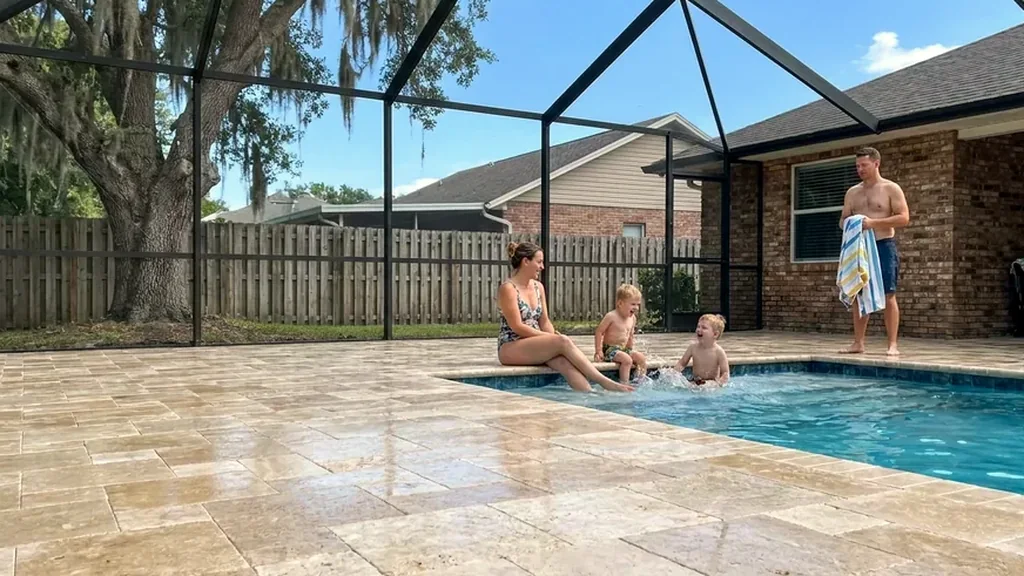
Why hire a contractor who works near the coast?
A contractor who works around the beaches already plans for salt haze, blowing sand and storm season. You get the price on paper, and the final call is yours. To begin, call (904) 541-9975.
Contractors used to the coast
A company that works the beach side of Duval County already plans for salt haze, wind-blown sand and sudden storms. That gives the first visit more value.
A price with no pressure
The visit is free, and you are never required to hire anyone. If the number does not suit you, you can say no and move on.
Published rates to compare
Companies around Jacksonville publish per-square-foot rates, and this site lists them for you. A quote far above or far below them deserves a question.
Your schedule comes first
Get every number in writing, and decide when you are ready. Before you agree to anything, the contractor standards page shows what to confirm.
How do I get a free paver sealing estimate?
Call or send the short form. Replies arrive within 1 business day, usually much sooner.
Free, no obligation
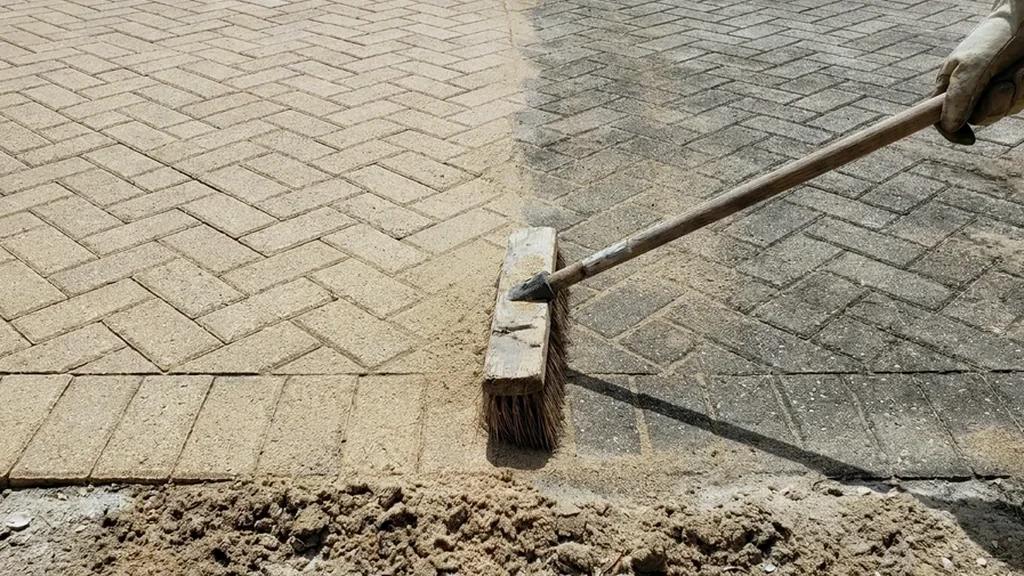
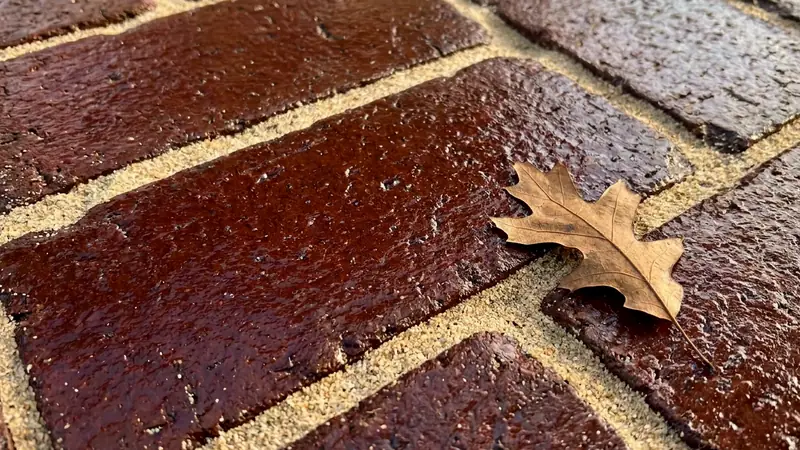
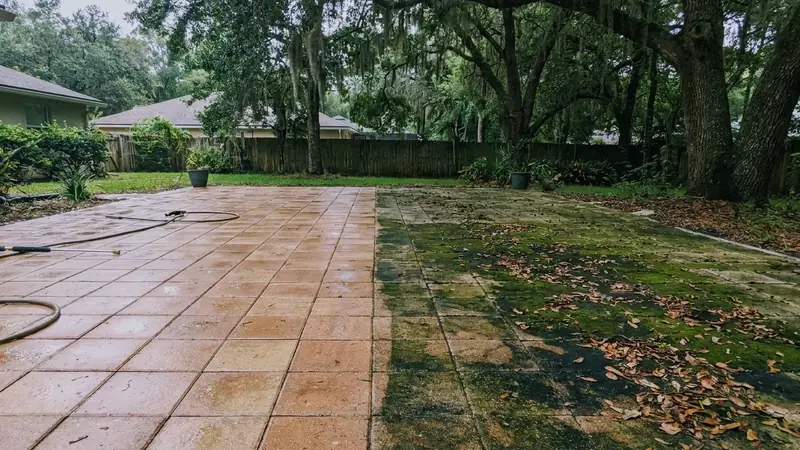
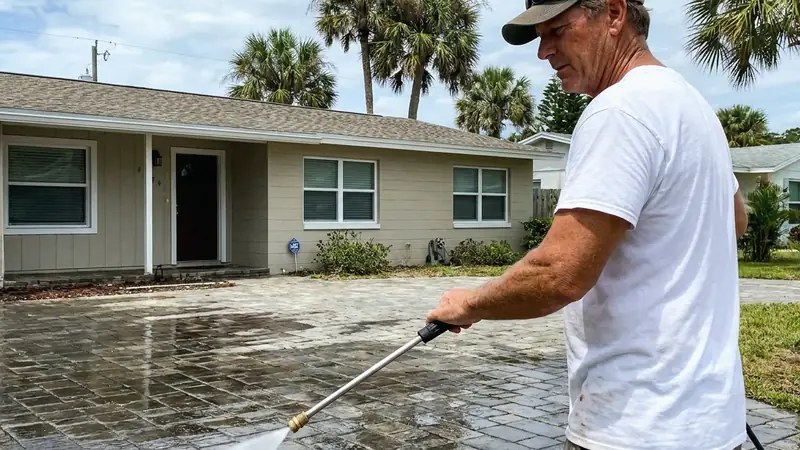
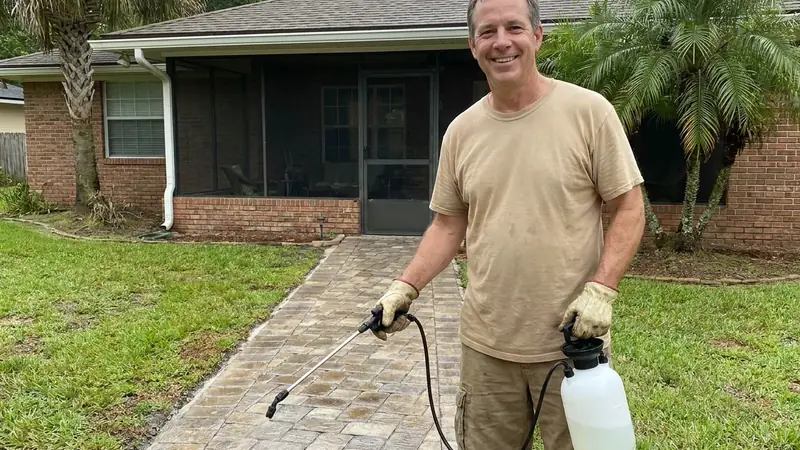
How do pavers look after sealing at a Jacksonville Beach home?
How does the paver sealing process work from start to finish?
The paver sealing process follows five steps, from the first look to the final walk-through. When you are ready to schedule, call (904) 541-9975.
1. Photos and a walk-through
The contractor looks over the area and measures it for the sealing quote. Low spots, loose pavers, old sealer and any place where water sits all get noted.
2. Protect and clean
Plants, outlets and windows are covered first. A rotary surface cleaner then washes the pavers at a pressure that leaves the joint sand in place.
3. Treat haze and stains
Salt haze, mildew and rust each get a cleaner made for that problem, tested on a small spot first.
4. Refill the joints
Once the pavers dry, kiln dried joint sand is swept in and compacted, and the extra is cleared off the surface.
5. Seal and walk it with you
When sealer is part of the job, it goes on dry pavers and standing puddles are rolled out. Last, the contractor walks the finished area with you and tells you when people and vehicles can use it again.
Frequently Asked Questions
What do professionals use to seal pavers?
A 2026 Jacksonville guide describes two families of sealer, film-forming for a wet look and penetrating for a natural look. One Jacksonville company lists four finishes: wet look high gloss, wet look satin, natural matte and a penetrating product for natural stone. It also sweeps in kiln dried joint sand first and rolls out standing puddles after the sealer goes on.
Why is paver sealing so expensive?
Most of the price pays for the prep, not the sealer. Washing, stain treatment, refilling joints and waiting for a dry surface take more hours than the coat itself. A 2026 Jacksonville guide warns that bids under $1 per square foot suggest skipped prep or thinned product that may fail within a year.
How long does paver sealing last in Florida?
Two to five years is the span a Jacksonville sealing company gives for Northeast Florida, depending on sun, traffic and prep. Another Jacksonville company calls two to three years typical and says full sun, pool chlorine and storms can bring it down to about two.
How much does it cost to re-sand and seal pavers?
A Jacksonville washing company publishes $1.75 to $3.25 per square foot to clean, sand and seal, so the new sand is part of that figure. If only the joint sand needs replacing, a 2026 Jacksonville guide lists $0.25 to $0.75 per square foot.
Does salt air wear out paver sealer at Jacksonville Beach?
Salt does show up on pavers here. A Jacksonville company says it leaves a white haze after windy weather, which is treated with chemistry and a rinse. Ask any contractor how the haze gets cleared before sealer goes on, because sealer locks in whatever sits underneath.
Can pavers at a Jacksonville Beach rental be sealed between guests?
It can be done with planning. One Jacksonville company says its beach crews schedule early mornings and quick turnarounds for rentals. Sealer still needs a dry surface, so ask for the whole timeline, including when cars and guests can walk on the pavers again.
What happens if sealer goes over beach sand?
The job is likely to fail. A Jacksonville company says sealing over beach sand is how jobs fail, because sand takes the place of the joint sand that should be there. The right order is to clean the sand out, restore proper joint sand and then seal on a dry surface.
When is the right time of year to seal pavers in Jacksonville Beach?
Pick a dry stretch, and keep an eye on hurricane season. One Jacksonville company names October and November as the time to seal pavers. Rain and summer storms can move any date, since sealer needs a dry surface.
Is it a good idea to seal pavers around a pool?
Yes, with the right product. A 2026 Jacksonville guide says penetrating sealers are generally preferred on pool decks for traction, while a glossy film can create slip hazards when wet. Pool chemistry also affects how often a deck needs resealing.